In today’s competitive market, getting your product into the hands of potential customers is more crucial than ever. So, what is product sampling? At its core, product sampling is a marketing strategy where a brand distributes free samples to consumers, allowing them to experience the product firsthand before making a purchase.
That direct interaction is what makes product sampling so powerful. Rather than relying on advertising alone to communicate value, sampling allows the product to speak for itself. Consumers can taste it, try it, use it, and decide in real time whether it belongs in their lives.
For brands, that creates a valuable opportunity to build trust, accelerate trial and create memorable first impressions that can lead to repeat purchase.
At Blobfish International, we use a data-driven product sampling marketing strategy to connect brands with the right audiences in the right environments, ensuring each campaign is relevant, measurable and built for impact.
The key role of product sampling in marketing
So, what makes product sampling such an important part of modern marketing?
Unlike traditional advertising, which often relies on awareness alone, product sampling bridges the gap between visibility and action. It gives people the chance to experience your product directly, reducing hesitation and increasing confidence in the brand.
This matters because many purchase barriers are rooted in uncertainty. Consumers might like the packaging, understand the offer, or recognise the brand, but still hesitate if they have not tried the product before. Sampling removes that barrier.
That is why product sampling in marketing has become such a valuable tool for brands looking to launch, grow, or reposition products in crowded categories.
As sampling continues to evolve, the focus has shifted away from mass giveaway models and toward more relevant, better-timed placements. This shift toward smarter, more targeted distribution is explored in new audience sampling↗, where Blobfish’s expanding network is designed to connect brands with consumers in more meaningful ways.
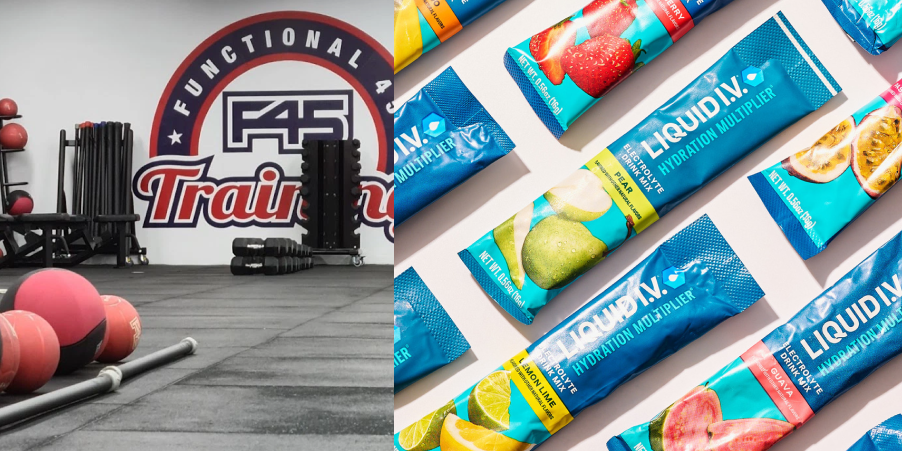
F45 gyms in the fitness market, have already begun leveraging the extended reach of the new channels. View article ↗
What is product sampling marketing?
When people ask, what is product sampling marketing, they are usually referring to more than just handing out free products. Product sampling marketing is the strategic use of product trial to influence awareness, perception, purchase intent and loyalty.
It is not simply distribution for the sake of reach. The strongest campaigns are designed around:
- the right audience
- the right timing
- the right channel
- the right environment
That could mean a snack product arriving inside a meal kit, a wellness item placed in a gym recovery space, or a premium beauty product discovered in an Airbnb or hotel stay. In each case, the product appears in a moment where it feels natural and useful.
That is what separates strategic sampling from outdated models. As we explored in our piece on modern product sampling strategies↗ in Australia, brands are no longer relying on generic high-volume handouts alone. Instead, we’re seeing a shift toward more targeted product sampling marketing that prioritises context, relevance and measurable outcomes.

Quality-controlled sampling network, spanning food delivery platforms, meal kits, Airbnbs, hotels, childcare centres, gyms, offices, rideshare vehicles and more across Australia, New Zealand, the UK and US. View article ↗
How product sampling can supercharge your marketing mix
A strong marketing mix relies on multiple touchpoints working together. Product sampling is effective because it does not sit outside your strategy. It strengthens it.
Here is how sampling can support the broader goals of your marketing mix.
1. Building brand awareness
Introducing a new product to market can be difficult, especially when consumers are already overwhelmed with choice. Sampling cuts through that noise by creating a direct, personal interaction between your product and your audience.
That first experience often does more for awareness than an ad ever could, because it transforms your product from something seen into something felt. When consumers try a product in the right environment, the brand becomes more memorable and more meaningful.
With product sampling marketing, awareness comes from real interaction, not just repeated exposure.
This is particularly effective when the sampling placement feels relevant to the consumer’s routine. Reaching someone at home, on the go, at work or in a social setting gives the brand greater chance of standing out because the product becomes part of an existing behaviour rather than an interruption.
2. Driving sales and customer loyalty
One of the clearest benefits of sampling is its ability to influence conversion. When consumers try a product and enjoy it, they are far more likely to buy it. That is the immediate value.
But the longer-term value is loyalty.
A positive first experience builds familiarity. Familiarity builds trust. Trust makes repeat purchase more likely. Over time, that can shift a consumer from first-time trier to regular customer.
That is why the best campaigns are not only designed to deliver samples, but to create measurable paths to purchase. Through a targeted product sampling strategy, brands can align product trial with channels that support future action, whether that is online purchase, in-store conversion, or brand recall at shelf.
Sampling can also strengthen loyalty by positioning the brand within positive moments. If a product is discovered during a convenient, enjoyable or useful experience, consumers are more likely to associate it with value and relevance.
3. Gathering valuable insights
Sampling is not just about getting product out. It is also a way to gather insight.
Well-designed campaigns can help brands understand:
- who is responding best
- which channels are most effective
- what environments create the strongest engagement
- how product trial influences perception and purchase intent
This kind of feedback is valuable because it can shape not only your next campaign, but your wider marketing strategy. It helps brands move from assumption to evidence.
For example, a campaign may reveal that a product performs better in household delivery than in public activation, or that a specific audience segment is more responsive than expected. Those learnings can then be applied to future distribution, messaging and investment.
That is where a broader product sampling strategy becomes so important. Sampling should not be viewed as a standalone activity. It should feed the wider marketing mix with insights that improve future performance.
Why context matters more than ever
One of the biggest shifts in modern sampling is the move toward contextual relevance.
Consumers are more likely to respond positively when a product appears in an environment that makes sense. A sports drink after a workout, a snack during travel, a beauty product in accommodation, or a pantry item delivered with dinner all feel intuitive because they match the moment.
That relevance is what turns sampling from an interruption into an experience.
This is why brands are increasingly moving away from broad, generic sampling and toward more targeted models that reflect how people actually live. Blobfish’s growing channel mix across product sampling marketing in Australia, highlighted through our approach to new audience sampling↗, reflects this shift by opening up more ways for products to reach consumers where they already are.

Sample nappies for local families at Splash Aqua Park and Leisure Centre, part of a broader product sampling campaign in Australia designed to support everyday communities and drive meaningful impact through targeted distribution in this initiative. View article ↗
How product sampling fits into a smarter marketing strategy
Sampling is often most effective when it works alongside other channels rather than in isolation.
For example, a product sampling campaign can support:
- a product launch
- a retail rollout
- a seasonal push
- a brand awareness campaign
- a repositioning strategy
- a loyalty and retention initiative
It can also amplify digital activity. A product trial can increase the impact of social media, paid media, email or influencer campaigns by giving consumers a real-world point of connection with the brand.
This is where product sampling marketing solutions become more strategic. Instead of treating trial as a simple one-off, brands can use it as a catalyst for stronger performance across the whole marketing mix.
The brands getting the best results today are those recognising that sampling is not dead, it has simply evolved. Through our work in product sampling marketing in Australia, and as we’ve explored in old models of sampling↗, the most effective programs now prioritise precision, placement and measurable performance.

Consumers now expect brands to meet them where they are, and our alcohol product sampling campaigns in Australia are designed to do exactly that, delivering experiences that feel organic, credible and relevant in this activation. View article ↗
What makes a product sampling campaign successful?
A successful campaign usually comes down to a few core factors:
Audience fit
The product needs to reach people who are actually likely to care about it, use it and buy it again.
Channel relevance
The distribution environment should make sense for the category, occasion and consumer mindset.
Clear objectives
Whether the goal is awareness, trial, conversion or insight, campaigns perform better when success is clearly defined from the start.
Strong execution
Sampling only works when the logistics, timing and experience are well managed.
Measurement
Without feedback and reporting, it is hard to understand what worked and how to improve future performance.
That is why strong sampling campaigns are not just creative. They are operationally sound and strategically designed.
Why product sampling belongs in your marketing mix
So, what is product sampling in practice? It is one of the most effective ways to introduce your brand to new customers, create trust, encourage trial and gather insights that support future growth.
When integrated into a modern marketing mix, product sampling helps bridge the gap between awareness and action. It gives brands a way to meet consumers in relevant moments, create real experiences, and make a lasting impression that extends beyond the first interaction.
For brands looking to grow in competitive categories, that kind of direct connection is incredibly valuable.
If you are ready to launch a smarter, more effective campaign, Blobfish International can help. Explore our product sampling marketing solutions and discover how a more strategic approach can make your brand impossible to ignore.